Day 258 3/11/14: The Beatles Meet Jaws Part 2

The closest I ever get to feeling like a born again Christian is when I meet someone who doesn’t like or “get” the Beatles. Depending on their level of hostility, ignorance or indifference, I sometimes proselytize.  Other times I break out in a joyous sweat as I think of the heavenly sounds of “Nowhere Man.” Mostly I just feel blessed. The Beatles have been my myth to live by, the greatest story ever told.

But even I don’t think I could go on a Beatles-themed cruise.

While I have Beatle fanatic friends who make me feel part of the same joyous, endlessly mystical cult, going to official “fan” events (i.e. the dedication of John Lennon’s star on Hollywood Boulevard), have made me feel afraid and alone,  surrounded by people in various states of mental and emotional decay. When  I went to Liverpool, I preferred to make my pilgrimage with a local cab driver who used to help the Beatles unpack their gear at the Cavern, not travel on a psychedelic tour bus with weeping ladies wearing sweat-stained Sgt. Pepper jackets.

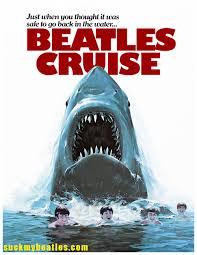
This mash-up of the Beatles swimming in a pool in Miami in 1964 with the shark from “Jaws 2” comes from the site of a guy who truly hates the Beatles. I wish I could meet him in the flesh. Maybe if I told him how much the idea of a Beatles cruise depresses and frightens me, we could establish some common ground. Then I could share with him the good word. Or at least shove some tracts under his door.
images-1

Day 257 3/10/14: Stop SeaWorld: Support the Orca Welfare Act!

The USDA has just busted SeaWorld for violating the Animal Welfare Act.

Let’s keep up the momentum created by Blackfish. Remember, as media attention moves elsewhere, the whales are still endlessly swimming in their 20 x 20 tanks. Unknown-2

PLEASE sign this if you believe it should be illegal to keep orcas in captivity!

Day 257: 3/9/14: South Park: “Whale Whores”

South Park really gives it to Paul Watson in this episode (while I’ve heard he’s stretched the truth about the number of ships he’s put out of commission, the depth of ire here surprised me), but the commentary about nature reality shows is great.
Thanks Connie!

Day 256 3/8/14: The Song Hospital (Pt.2)

“Bring your song to the Song Hospital.” I found the ad at the back of a 1940s magazine on amateur photography, one of many other ads offering the services of “song doctors.” I’d obviously heard the term “script doctor” but song doctor had such poetic possibilities—it made me wonder if songs had the potential to be broken, injured and healed.

This morning I woke up hearing “Save it For Later” in my head and I remembered another album I played and re-played to the point of physical destruction. Not even the most talented song doctors in the nation could have saved this record.

In 1982, my mother and brother and I moved to Ojai, California from a little town in Massachusetts. Everything felt exotic to me, the orange groves across the street, the huge mountains and that summer’s baking heat so different from New England humidity. The heat melted the tapered candles in their very colonial looking candlesticks, until they began to softly droop. School hadn’t started. I stayed inside the shady and cavernous living room, watching Twilight Zone episodes and at night listening to records.

I played Bruce Springsteen’s “Nebraska,” endlessly that summer. Moody and spare, the music did not match Ojai’ s pink mountain sunsets and horse ranches and oak groves. Each time I played the record again, my brother would groan and blast “Sex Bomb,” by Flipper to obliterate “Nebraska’s” harmonica, its mournful evocation of Midwest interstates, of killers, war veterans and state troopers:

Me and Frankie laughing and drinking

Nothing feels better than blood on blood

Taking turns dancing with Marie

While the band played Night of the Johnstown Flood

Even when I wasn’t playing “Nebraska,” it played in my head. I had an orange cat named Vincent. Late one afternoon I found his body by the side of the road. I wasn’t sure how he’d died, but I decided not to burden my mother with the news right away. So I buried Vincent in the overgrown backyard, thinking as I wielded the shovel that digging a grave by moonlight, did feel like something out of the black and white world of “Nebraska,” that I’d finally begun to live the songs that until then I’d merely memorized:

Everything dies baby that’s a fact

Maybe everything that dies someday comes back

By September, “Nebraska” became unplayable. The two sides somehow merged, melting into each other until the songs spoke to one another in an avant-garde dialogue.

I took a strange pride in this, as if I’d taken music to some new extreme, the frontier of teenage loyalty. I’d passed into the grooves themselves.

I’m not so reverent, so fanatical anymore, but as a writer music remains to me a vital companion. To evoke a particular mood right, I do what so many writers do. I play the same song over and over. And I am amazed at how durable these songs are, how long the spell can be stretched out without losing its power, how a good song can reach into so many different directions at once, each of which is true—a love song is an otherworldly invocation of the next world and a world-weary reflection about being a cocaine-fueled rock star all at the same time.

When the wind blows and the rain feels cold

With a head full of snow

With a head full of snow

If I listen to “Moonlight Mile,” by the Rolling Stones, I exist at once in two places: the actual road I am trying to evoke on the page, a blue road in the country, that I’ve walked many times and another road where the dead travel, one that seems familiar beyond memory. As long as the song is playing, I can see both roads, blurring and vanishing into each other, and I am rooted to the ground, echoing in the emptiness of the air.

Day 255 3/7/14: The Song Hospital (Pt. 1)

I’ve been listening to the same song for three days. No news. No movies. Nothing. Just one song. In my car. In my apartment. I want to see what lies beyond the fog of the too familiar, beyond the edge of boredom. Can a song heard so many times become new again? Will the ending sound less wistful when I know it’s going to start again for the fortieth time?

The song is “Save it For Later” by the English Beat. In the 80s, I kept a radio vigil for it, along with “Talk of the Town,” by The Pretenders. I saw the English Beat perform it at “New Wave Day” at the US Festival in 1982, the same day I saw the Clash and A Flock of Seagulls. It had been a long hot day of rock in San Bernadino, but when the English Beat came out, all skinny and New Wave, I felt reborn.

***

The song is fast. The unfolding spell of memory is slow. It’s the summer of 1983 and I’m in the country, at my father’s house waiting for a letter. I can feel the cold grass under my feet. When I hear a car on the road I shade my eyes with a biography of Keith Moon and look out toward the mailbox. The song won’t give me any more than that. Just a loop. Sun and cold grass. Keith Moon. Waiting.

***

 I’ve heard it 100 times and there are still lines I cannot decipher: “My seven seas are rotten through? The seven seas I’m walking through?” But I’m afraid to look up the words. If I know the muddled parts, maybe I’ll lose the grass and sun and whatever feeling rushed through me years ago when I waited for the song, for the letter to set me free.

***

When my father drank too much, he played songs over and over. As a child, I once played “Yellow Submarine” about 35 times at his request.  But my father shattered this record one summer when he played “Against the Wind” by Bob Seger fifty times in a row. In the line “deadlines and commitments, what to leave in, what to leave out,” Bob Seger had effortlessly channeled my father’s daily struggle at the typewriter banging out stories about ax murderers and Boston politicians, about defrocked priests and lady blacksmiths. Combined with the potent melancholy of “drifters days” and “seeking shelter” “Against the Wind” conjured a spell against which my father was powerless.

I could do nothing but sit with him at the bar he’d created off the kitchen, under the genuine wagon wheel lights, and dime store dream catchers drinking cold well water and listening to “Against the Wind,” until some of my cynicism melted. Upstairs, I slid into a creaky bed in a room cluttered with newspapers all of which contained my father’s stories.

I guess I lost my way, oh so many roads….

Each time I came home, I cut some of the stories out of those papers. That night, I couldn’t sleep. I couldn’t dream. I couldn’t find the crooked scissors I usually used to excise his words from the dry bulk of the Boston Herald. I heard the shuffling of slippers downstairs. I could hear my father cough and open the cupboards rooting around for crackers.


I’m older now and still running


I listened and somewhere in that slim fragment of darkness, waiting for the song to begin again, I felt the interminable open out into something vast and tender.

***

I’m 17. “Save it For Later” comes on at the Halloween party where I am dressed as a slutty vampire, my hair electrified with Dippity-Do. The guy I’m with is 24. He’s embarrassed to be at a high school party. I sit on the edge of the chair where he’s sitting.  Cold saliva pools around my fake fangs. I rest my hand on his shoulder, in silent rapture. When the song is over, we’ll go into my friend’s room, but not a moment before.

 At the moment Ranking Roger sings Don’t bother trying to explain…Just hold my hand while I come to a decision on it

I want to hold his hand. To see if he notices.  To see if I can finally match song with world.

Day 252 3/4/14: JAWS meets The Beatles

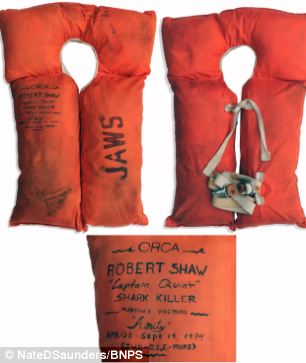
I ALWAYS freak out when my obsessions collide. Especially The Beatles and JAWS. I nearly had a coronary a couple summers ago when I found a book of John Lennon’s drawings in which he’d scribbled a swimmer being chased by a huge black dorsal fin.
(Drawing circa 1976, waning JAWS era! I had always geeked out wondering how John would have felt watching JAWS when Richard Dreyfuss snaps at Quint: “I don’t need this working class hero crap.”)
Now, I stumbled on this unknown youtube visionary who has blended the ocean and radio and other sounds of the first scenes of JAWS with the Beatles Revolution 9, and some piece of John Lennon audio which, I admit I can’t readily tie to an interview.

(Is he talking about A Hard Day’s Night or Let it Be?)

Day 251 3/3/14: “When There Were Ghosts”

popcorn18If you like poetry, sign up for the Academy of American Poets’ Poem-a-Day e-mail. It’s pretty great. I loved today’s poem by Albert Rios. It reminded me of the first time I saw “Jaws” and how all the cigarette smoke rose from the front row creating wraiths of fog around the screen.

When There Were Ghosts

On the Mexico side in the 1950s and 60s,

There were movie houses everywhere

And for the longest time people could smoke

As they pleased in the comfort of the theaters.

The smoke rose and the movie told itself

On the screen and in the air both,

The projection caught a little

In the wavering mist of the cigarettes.

In this way, every story was two stories

And every character lived near its ghost.

Looking up we knew what would happen next

Before it did, as if it the movie were dreaming

Itself, and we were part of it, part of the plot

Itself, and not just the audience.

And in that dream the actors’ faces bent

A little, hard to make out exactly in the smoke,

So that María Félix and Pedro Armendáriz

Looked a little like my aunt and one of my uncles–

And so they were, and so were we all in the movies,

Which is how I remember it: Popcorn in hand,

Smoke in the air, gum on the floor–

Those Saturday nights, we ourselves

Were the story and the stuff and the stars.

We ourselves were alive in the dance of the dream.

Day 250 3/2/14: If You’re Feeling Lost….

This is a poem by Robert Frost called “Directive.” 

Back out of all this now too much for us,

Back in a time made simple by the loss

Of detail, burned, dissolved, and broken off

Like graveyard marble sculpture in the weather,

There is a house that is no more a house

Upon a farm that is no more a farm

And in a town that is no more a town.

The road there, if you’ll let a guide direct you

Who only has at heart your getting lost,

May seem as if it should have been a quarry—

Great monolithic knees the former town

Long since gave up pretense of keeping covered.

And there’s a story in a book about it:

Besides the wear of iron wagon wheels

The ledges show lines ruled southeast-northwest,

The chisel work of an enormous Glacier

That braced his feet against the Arctic Pole.

You must not mind a certain coolness from him

Still said to haunt this side of Panther Mountain.

Nor need you mind the serial ordeal

Of being watched from forty cellar holes

As if by eye pairs out of forty firkins.

As for the woods’ excitement over you

That sends light rustle rushes to their leaves,

Charge that to upstart inexperience.

Where were they all not twenty years ago?

They think too much of having shaded out

A few old pecker-fretted apple trees.

Make yourself up a cheering song of how

Someone’s road home from work this once was,

Who may be just ahead of you on foot

Or creaking with a buggy load of grain.

The height of the adventure is the height

Of country where two village cultures faded

Into each other. Both of them are lost.

And if you’re lost enough to find yourself

By now, pull in your ladder road behind you

And put a sign up CLOSED to all but me.

Then make yourself at home. The only field

Now left’s no bigger than a harness gall.

First there’s the children’s house of make-believe,

Some shattered dishes underneath a pine,

The playthings in the playhouse of the children.

Weep for what little things could make them glad.

Then for the house that is no more a house,

But only a belilaced cellar hole,

Now slowly closing like a dent in dough.

This was no playhouse but a house in earnest.

Your destination and your destiny’s

A brook that was the water of the house,

Cold as a spring as yet so near its source,

Too lofty and original to rage.

(We know the valley streams that when aroused

Will leave their tatters hung on barb and thorn.)

I have kept hidden in the instep arch

Of an old cedar at the waterside

A broken drinking goblet like the Grail

Under a spell so the wrong ones can’t find it,

So can’t get saved, as Saint Mark says they mustn’t.

(I stole the goblet from the children’s playhouse.)

Here are your waters and your watering place.

Drink and be whole again beyond confusion.