
Much has been written about the negative legacy of “Jaws,” the mindless eating machine myth that fueled so much wanton killing of sharks. But many marine biologists and shark researchers have also cited “Jaws” as the reason they fell in love with sharks in the first place.
I wonder how many of them actually read Peter Benchley’s novel before they saw the movie?
I love the idea of harnessing the power of pop culture to save animals. Today, my friend Dan and I began planning a benefit for early next year to coincide with the 40th anniversary of the publication of “Jaws.” What better way to raise money for an threatened species than through dramatic readings of the thrilling, cheesy glory that is Benchley’s novel?
I still have my copy. It’s missing a back cover, and the front is held on by gleaming bits of tape, but I can still see that familiar and beloved conical shark head rising through the green, wrinkled sea. I read this book again and again—slumping in the back of my mother’s car, hiding in the sheltering branches of a maple tree, feeling sophisticated on the school bus. I loved Benchley’s description of the “great fish” and felt baffled by his detailed account of Ellen Brody’s pre-coital rituals ( did women really put baby powder their bras?).
Although I didn’t become a marine biologist, I’m grateful to Peter Benchley for initiating me into the two great mysteries of nature–the apex predator and the bored housewife.
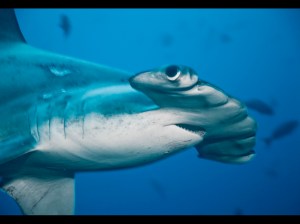
 Shark Dreams