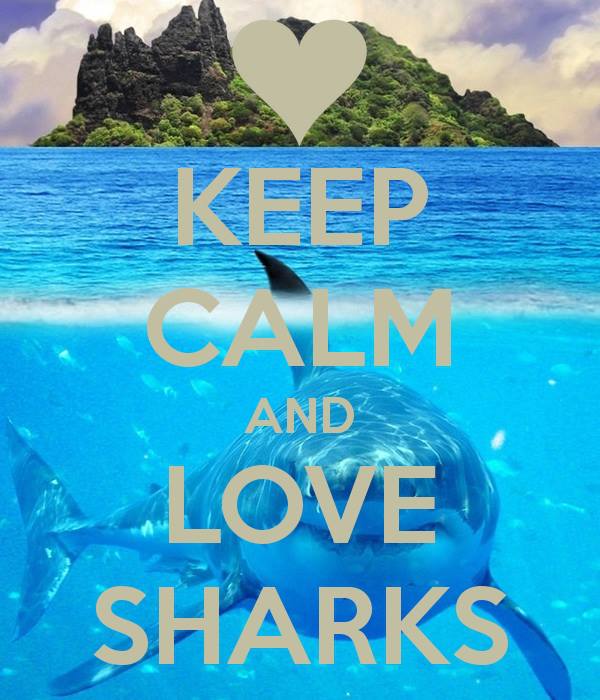
I’m a bit burned out on these meme or motto or whatever it is, but I like the idea of the words “calm” and “love” being superimposed over the image of a great white.

I’m a bit burned out on these meme or motto or whatever it is, but I like the idea of the words “calm” and “love” being superimposed over the image of a great white.
More diving lessons today. Better. I didn’t feel like a helpless tumbling astronaut as much, though I was eternally vexed by the task of detaching the connector hose to my BC underwater. And putting on a wetsuit still feels like skull-fucking the Michelin man. But I felt so peaceful snorkeling across the pool, watching the glittering light patterns on the bottom, broad wavering bands of light like David Hockney’s swimming pool paintings.
Why is art so often my first way into nature?
I felt happy that I’d grown a little closer to becoming a better swimmer. Crossing the pool wearing my lovely blue split fins it hardly felt like swimming at all. And how strange that a deep-seated fear of sharks should lead me to something so pleasurable.
Writing about struggling with the wetsuit-as-Michelin-Man made me think of my sister Janet. I can’t really think of a single thing that Janet feared. Truthfully, she often had a bit of contempt for those who let fear paralyze them. Janet was pure fire, such a force of nature, that it was inconceivable to me that she would ever die. Continue reading
Once in a while you read the poem that articulates something you’ve been trying to say your entire life. This is one of those poems for me.
Animals & People: The Human Heart in Conflict with Itself
by Pattiann Rogers
Some of us like to photograph them. Some
of us like to paint pictures of them. Some of us
like to sculpt them and make statues and carvings
of them. Some of us like to compose music
about them and sing about them. And some of us
like to write about them.
like to write about them.Some of us like to go out
and catch them and kill them and eat them. Some
of us like to hunt them and shoot them and eat them.
Some of us like to raise them, care for them and eat
them. Some of us just like to eat them.
them. Some of us just like to eat them.And some of us
name them and name their seasons and name their hours,
and some of us, in our curiosity, open them up
and study them with our tools and name their parts.
We capture them, mark them and release them,
and then we track them and spy on them and enter
their lives and affect their lives and abandon
their lives. We breed them and manipulate them
and alter them. Some of us experiment
upon them.
upon them.We put them on tethers and leashes,
in shackles and harnesses, in cages and boxes,
inside fences and walls. We put them in yokes
and muzzles. We want them to carry us and pull us
and haul for us.
and haul for us.And we want some of them
to be our companions, some of them to ride on our fingers
and some to ride sitting on our wrists or on our shoulders
and some to ride in our arms, ride clutching our necks.
We want them to walk at our heels.
We want them to walk at our heels.We want them to trust
us and come to us, take our offerings, eat from our hands.
We want to participate in their beauty. We want to assume
their beauty and so possess them. We want to be kind
to them and so possess them with our kindness and so
partake of their beauty in that way.
partake of their beauty in that way.And we want them
to learn our language. We try to teach them our language.
We speak to them. We put our words in their mouths.
We want them to speak. We want to know what they see
when they look at us.
when they look at us.We use their heads and their bladders
for balls, their guts and their hides and their bones
to make music. We skin them and wear them for coats,
their scalps for hats. We rob them, their milk
and their honey, their feathers and their eggs.
We make money from them.
We make money from them.We construct icons of them.
We make images of them and put their images on our clothes
and on our necklaces and rings and on our walls
and in our religious places. We preserve their dead
bodies and parts of their dead bodies and display
them in our homes and buildings.
them in our homes and buildings.We name mountains
and rivers and cities and streets and organizations
and gangs and causes after them. We name years and time
and constellations of stars after them. We make mascots
of them, naming our athletic teams after them. Sometimes
we name ourselves after them.
we name ourselves after them.We make toys of them
and rhymes of them for our children. We mold them
and shape them and distort them to fit our myths
and our stories and our dramas. We like to dress up
like them and masquerade as them. We like to imitate them
and try to move as they move and make the sounds they make,
hoping, by these means, to enter and become the black
mysteries of their being.
mysteries of their being.Sometimes we dress them
in our clothes and teach them tricks and laugh at them
and marvel at them. And we make parades of them
and festivals of them. We want them to entertain us
and amaze us and frighten us and reassure us
and calm us and rescue us from boredom.
and calm us and rescue us from boredom.We pit them
against one another and watch them fight one another,
and we gamble on them. We want to compete with them
ourselves, challenging them, testing our wits and talents
against their wits and talents, in forests and on plains,
in the ring. We want to be able to run like them and leap
like them and swim like them and fly like them and fight
like them and endure like them.
like them and endure like them.We want their total
absorption in the moment. We want their unwavering devotion
to life. We want their oblivion.
to life. We want their oblivion.Some of us give thanks
and bless those we kill and eat, and ask for pardon,
and this is beautiful as long as they are the ones dying
and we are the ones eating.
and we are the ones eating.And as long as we are not
seriously threatened, as long as we and our children
aren’t hungry and aren’t cold, we say, with a certain
degree of superiority, that we are no better
than any of them, that any of them deserve to live
just as much as we do.
just as much as we do.And after we have proclaimed
this thought, and by so doing subtly pointed out
that we are allowing them to live, we direct them
and manage them and herd them and train them and follow
them and map them and collect them and make specimens
of them and butcher them and move them here and move
them there and we place them on lists and we take
them off of lists and we stare at them and stare
at them and stare at them.
at them and stare at them.We track them in our sleep.
They become the form of our sleep. We dream of them.
We seek them with accusation. We seek them
with supplication.
with supplication.And in the ultimate imposition,
as Thoreau said, we make them bear the burden
of our thoughts. We make them carry the burden
of our metaphors and the burden of our desires and our guilt
and carry the equal burden of our curiosity and concern.
We make them bear our sins and our prayers and our hopes
into the desert, into the sky, into the stars.
We say we kill them for God.
We say we kill them for God.We adore them and we curse
them. We caress them and we ravish them. We want them
to acknowledge us and be with us. We want them to disappear
and be autonomous. We abhor their viciousness and lack
of pity, as we abhor our own viciousness and lack of pity.
We love them and we reproach them, just as we love
and reproach ourselves.
and reproach ourselves.We will never, we cannot,
leave them alone, even the tinest one, ever, because we know
we are one with them. Their blood is our blood. Their breath
is our breath, their beginning our beginning, their fate
our fate.
our fate.Thus we deny them. Thus we yearn
for them. They are among us and within us and of us,
inextricably woven with the form and manner of our being,
with our understanding and our imaginations.
They are the grit and the salt and the lullaby
of our language.
of our language.We have a need to believe they are there,
and always will be, whether we witness them or not.
We need to know they are there, a vigorous life maintaining
itself without our presence, without our assistance,
without our attention. We need to know, we must know,
that we come from such stock so continuously and tenaciously
and religiously devoted to life.
and religiously devoted to life.We know we are one with them,
and we are frantic to understand how to actualize that union.
We attempt to actualize that union in our many stumbling,
ignorant and destructive ways, in our many confused
and noble and praiseworthy ways.
and noble and praiseworthy ways.For how can we possess dignity
if we allow them no dignity? Who will recognize our beauty
if we do not revel in their beauty? How can we hope
to receive honor if we give no honor? How can we believe
in grace if we cannot bestow grace?
in grace if we cannot bestow grace?We want what we cannot
have. We want to give life at the same moment
we are taking it, nurture life at the same moment we light
the fire and raise the knife. We want to live, to provide,
and not be instruments of destruction, instruments
of death. We want to reconcile our “egoistic concerns”
with our “universal compassion.” We want the lion
and the lamb to be one, the lion and the lamb within
finally to dwell together, to lie down together
in peace and praise at last. 

RIP DICKIE GOODMAN
I wrote a letter to the New Yorker re: their recent piece “Cape Fear” which is largely about OCEARCH. I tried to keep it brief, mostly questioning why they use brutal hook and haul methods, outdated tagging etc. Despite their current status as media darlings, I do believe people will eventually see the truth about OCEARCH’s shoddy science and macho spectacle.
I also learned about the suicide of Dickie Goodman, the zany mastermind behind my well-worn and much loved 45 of “Mr. Jaws” (#4 in 1975), not to mention earlier gems as “Energy Crisis ’74,” “Batman and his Grandmother” & “Frankentstein meets The Beatles.” Dickie shot himself back in 1989, but I didn’t find out until today when I decided to play a Youtube clip of “Mr. Jaws” for my baffled students. They laughed exactly once. “What IS this?” someone finally asked. Thank God they’d heard of Weird Al, so I could briefly outline the novelty record genre, although I just couldn’t summon the energy to explain K-Tel. 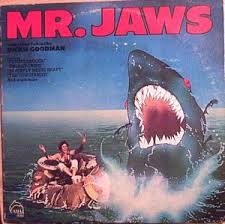
Today in the darkness of the classroom, I remembered how pop culture is often a kind of vehicle for the spiritual, the sacred. It is easy to remember this truth in the realm of music, but easier to forget during things like movies involving killer sharks.
In the last fifteen or so minutes of “Jaws,” Hooper submerged in his steel cage, tries to escape the gaping, strangely feminine mouth and battering ram of a body of the pursuing shark. Students groaned as Hooper’s spear gun glided hopelessly away to the sea floor. As the shark parted the bars of the cage and Hooper escaped into the sanctuary of a nearby reef, I said rather morosely, “I hope that doesn’t happen to me.” The class cracked up. I felt good not only because I’ll do anything for a cheap laugh, but because I sometimes remember: “Oh yeah, this whole project is culminating in my descent into the waters of South Africa in a shark cage!”
Often this truth flat-out horrifies me.
But today I started remembering my over twenty-year catalogue of shark dreams. I have been confronting sharks for years. Underwater, at the surface, sometimes flying through the air. But never consumed, never bitten or tugged at, never even bumped or inspected. I’ve watched for them at night, my binoculars trained on the dark water. I’ve lived in empty trailers on desolate beaches just to be near the seas where they swim unseen. So this descent into the cage, though foreign and terrifying in a physical sense, feels in some deeper, intuitive way, inevitable– the conscious version of the descent I’ve made for years in sleep, in dreams.

The Creature from the Black Lagoon at the Witch’s Dungeon Wax Museum in Bristol, CT. (Photo credit: Wikipedia)
Preparing for an erudite classroom discussion on “Jaws”, I thought I’d share some of these facts and fragments I gathered from Nigel Andrews’ wonderful JAWS guide.
1. The teeth of the three mechanical sharks used in the film–all named Bruce, after Spielberg’s lawyer, Bruce Ramer) were flossed regularly to rid them of seaweed.
2. Andrea Morton a Martha’s Vineyard waitress, starred as “Chrissie’s arm” (the severed appendage rising out of the crab and kelp littered sand hill that nearly makes Lt. Hendricks lose his lunch). Morton soaked her arm in a bucket of water for hours to capture the right shade of decomposed blue.
3. Richard Dreyfuss and Robert Shaw’s mutual distaste for each other apparently began when Shaw poured himself a whiskey lamenting, “I would give anything just to be able to stop drinking.” Dreyfuss reportedly said, “Okay” and promptly threw Shaw’s drink out a porthole. “He didn’t forgive me for that,” Dreyfuss recalled.
4. Spielberg filmed the scene in which Hooper (Dreyfuss) discovers Ben Gardner’s head in the wrecked hull of a boat in editor Verna Fields’ swimming pool, adding Carnation milk and little pieces of tin foil to the pool water to create murk and silt.
5. The death cry of the sinking, dying shark is actually archive audio from “The Creature from the Black Lagoon.”
I had to remind myself to take a deep cleansing breath when I noticed a few of my students texting during “Jaws” today. Later, one of the guilty boys confessed the movie was “just too scary” and with the acute senses of a predatory fish (or a fellow neurotic), I detected residual fear in the shuffling way he gathered his books and hid his eyes behind a lank of dark hair.
Several people laughed when the bereaved Mrs. Kintner slaps Chief Brody in the face for keeping the beaches open and letting her son Alex get chomped. Is this a kitschy moment? Perhaps. But I always found the scene too odd or mysterious to be pure melodrama. The black-veiled Mrs. Kintner is accompanied by a silent old man who might be her father or grandfather and the two of them progress in some odd inversion of a wedding march toward Brody.
As Antonia Quirke noted in her BFI essay on “Jaws”: “She’s much older than the other mothers at the waterfront. This child was her last chance” (35). Quirke also notes that a slap in the movies normally stands in for sex, but “[t]o be slapped by Mrs. Kintner in mourning is like being kissed by a skeleton, it has that disquieting taboo mixed in” (36).
The book store ran out of my shark texts which may have explained this group’s lack of enthusiasm for uterine cannibalism or the ampullae of Lorenzini. So other than typing up a quick shark biology quiz, I’ve been checking in with the STOP OCEARCH activists. Sad to hear that the New Yorker did a story about OCEARCH (thanks for the tip, Connie), but pleased to know that a film exposing these charlatans (Price of Existence) and other marine exploitation is in the works. I’ll try to do what I can to help with the fundraising/consciousness raising for this project.
Performed a hodge-podge of shark chores today: signed this petition to ban shark fin soup in Australia, stuffed more envelopes in my endless restaurant letter campaign, did miscellaneous shark-related schoolwork. But what really kicked my ass today is this post from the Vegangster blog that extends the argument of John Lennon’s 1972 song “Woman is the Nigger of the World” to animals. (John Lennon is pretty much my favorite person ever, but more on that later).
I have been a “sloppy” vegan for quite some time, eating bits of goat cheese here and there, and once every few months an egg or two and I never feel good about it. I’m also tired of whining about how hard it is go completely vegan. Feeling guilty and lame about my half-assed veganism is even more difficult.

Woman Is the Nigger of the World (Photo credit: Wikipedia)
Decayed. Abandoned. Immortal
A literary journal of safety and danger
Today's News, Yesterday's History
The daily musings of a writer.
News and images from The Forbidden Kingdom, opening in the US April 18, 2008
4 out of 5 dentists recommend this WordPress.com site
Because we don't have the luxury of being single-issue
Essays on Creative Nonfiction
A Creative Camera Club Inspiring people to take photographs
Writer, Reader, Kind of Spritely Looking
Historic Hollywood and Southern California Architecture, History, People and Travel by Steve Vaught
Forget Hunters' Feeble Rationalizations and Trust Your Gut Feelings: Making Sport of Killing Is Not Healthy Human Behavior
DEENA METZGER'S BLOG
This is where Island Radio 88.7 FM podcasts - and more...
Smart and surprising
Critique Collective is your source for information and interviews about emerging and established contemporary artists.
A daily dose of funny videos
Speaking for those with no voice~
outsider publishing from 2011 to 2015
 Shark Dreams