Day 301 4/23/14: Hope for Australia’s Sharks?

This glimmer of hope comes from shark divers blog. Western Australia has decided to open up the shark cull policy to a Public Environmental Review. This means that for a four week period, the public can send in their thoughts about the shark kill plan.

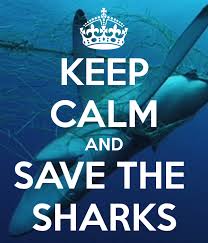
I will post more information about where the public can send in their comments as soon as it’s available. In the meantime, check out these tips about how to compose an effective, rational letter & for a handy shark fact sheet.  While I am more than tired of the “Keep Calm” sentiment in all its myriad forms, I have to admit in this case it’s handy as it reminds me of the necessity not to get too fired up and freaked out before I write a letter about an issue that I hope to change someone’s mind about. images-1

Day 292: 4/14/14: Chinese Billionaire Named “Shark Guardian”

images-3After so much sad stuff about the shark cull and drum lines in Australia, it’s nice to read this inspiring story about four  Chinese businessmen who fought to get shark fin soup off the menu at government banquets.

Day 291 4/13/14: 2 Minutes to Save Australia’s Sharks!

While the shark cull continues in Western Australia, sharks and other fish are also victims of drum lines (traps with baited hooks that kill sharks and other marine life indiscriminately). Neither the “culling” of sharks nor the presence of drum lines is likely to prevent future attacks by great white sharks in Western Australia, but only weaken an already stressed eco-system by removing its apex predators and other marine life. Please take just a few minutes and send an e-mail to the Australian government to ask them not to extend the use of drum lines! After the e-mail information, you can also check out the list of suggested resources to include in your letter. (Thanks Melissa Michaelson for posting this on FB).

Australia2


HOW TO SEND AN E-MAIL: 

Urgent Time Sensitive Message from ‪#‎noWAsharkcull‬
In March, the Environment Protection Agency (EPA) chose NOT to assess WA’s drum line policy because they deemed it to be of ‘very limited duration’ and so they said that it ‘will not have a significant impact on the environment’. This was when the policy was due to end on April 30th 2014, which has now changed with the Government asking for approval until 2017.
We only have 5 days to take action. You can help Stop The Cull by spending just 2 minutes of your time to submit a comment to the EPBC opposing the policy:
1. Email your comments opposing the WA drum lines to – epbc.referrals@environment.gov.au (Before Thu 17 April).
2. In the subject bar include the following “Comment on WA drum line referral – reference no. 2014/7174”
3. In the email include the full title and reference no, which are as follows:

Title: WA Department of the Premier and Cabinet/Natural resources management/off metropolitan & SW coastal regions of Western Australia/WA/Shark Hazard Mitigation Drum Line Program
Reference no: 2014/7174
4. Suggested comments and links to relevant information are listed below.
6. Now SHARE, SHARE, SHARE – we only have until Thursday 17th April to get as many people to comment as possible.


————————————————————————————————————
SUGGESTED COMMENTS/LINKS TO INFO. TO ADD TO YOUR SUBMISSION:
1. WHITE SHARKS ARE PROTECTED under WA and Australian environmental laws and several international agreements including CITES and CMS.
2. WHITE SHARKS ARE APEX PREDATORS, their roles are vital to keep the health of the ocean in balance. Removing a migratory apex predator from our marine ecosystem is likely to have significant impacts on the species composition and abundance of other marine life.
3. WHITE SHARKS ARE NOT PRESENT IN WA WHEN DRUM LINES ARE OPERATIONAL.
White sharks are the main target of the policy yet their population’s peak during June-August each year in WA, which is outside the proposed drum line operational period of November to April (see page 13 of DoF report –http://goo.gl/FbLBXm).
4. DRUM LINES ARE INDISCRIMINATE and will catch and kill other species including dolphins, turtles and non-target sharks. Almost all of the sharks caught so far have been non-target, undersized, tiger sharks.

Continue reading

Day 288 4/10/14: Tell NOAA: No Pacific Shark Cull

hi_257734_366075We’re almost there!

This note of protest to  NOAA officials and Barack Obama needs only 76 more signatures!

Please sign and share this petition to preserve existing shark conservation laws  in Guam, Hawaii and the Northern Mariana Islands AND to say no to an insanely misguided proposal to “reduce shark biomass” by decimating already declining species of sharks in the Pacific.

Day 277 3/30/14: The Coolest Shark Site…EVER…..

great-white-shark-wallpapers_35944_852x480The ocean is oddly silent and still, then a white shark bursts out of the water, nearly sending a startled kayaker into the water. A surfer watches a black dorsal fin slice the surface and disappear. Headless seals wash up on the beach. These are just some of the thrilling dispatches from Pacific Coast Shark News, my favorite feature of Ralph Collier’s Shark Research Committee website. I have learned a tremendous amount about shark behavior and intelligence just from reading Pacific Coast Shark News. But keeping detailed and accurate records of shark activity along the Pacific Coast is only a small part of SRC’s very important work. They are currently working on a pioneering non-invasive DNA project that if funded could revolutionize shark conservation. The identification and migration patterns of specific shark populations through DNA, could help researchers predict the chances of future attacks offering an alternative to the barbaric retaliatory slaughter of sharks, like the “cull” happening in Australia right now.

For a $20 donation, you will receive the fascinating SRC Quarterly e-mail newsletter and for $70, you will receive Ralph Collier’s utterly riveting, lavishly illustrated book Shark Attacks of Twentieth Century.

Please consider making a donation of any amount, even $10–to help SRC continue its essential conservation and education efforts.

Day 273 3/26/14: Consider the Lobster (and the Crab!)

10153885_10151908464905895_386163572_nAlthough lobsters look like alien beings and live in a world, that despite all of our exploration and exploitation of it, remains “other” to us, science has proven that these strange and humble animals do indeed feel pain in ways quite similar to the ways we do. If you have never read David Foster Wallace’s essay Consider the Lobster, please do. Assigned to cover the Maine Lobster Festival for Gourmet magazine, DFW’s exploration of the orgy of butter and cracking claws and kitsch, becomes about something much more profound.

Day 272 3/25/14: An Artist of the Endangered

“Obviously great whites have a nasty reputation,” says artist Dave White. “But in actual fact they’re fragile and beautiful.  I want people to look at how rare they are–that’s the crux of it all.”

Image

Day 270 3/23/14: Shark Surrealism: Artist Unknown

Don’t know the provenance of this nightmarish painting, but I like the colors. It seems that these pickled specimens  have come alive in their floating jars, seeking escape and revenge. As much as I want to get lost in the weird, dream-like imagery, I can’t stop thinking about how buying shark pups in jars (like purchasing shark jaws or teeth) encourages the slaughter of these already beleaguered fish. Maybe that’s what these angry little babies have come back to tell us. (Thanks, Helen!)Image

Day 268: 3/21/14: Stop Rhode Island’s Shark Hunting Tournament

Dear Shark Friends,

It’s easy to get petition fatigue these days, but please speak out against this utterly pointless “monster” shark tournament.

Image

The picture says it all.

Sign and share and help this petition get 1,000 signatures.

Many thanks!

Day 267 3/20/14: Shark Dreams & Devil’s Teeth

If you love great white sharks, and haven’t read Susan Casey’s book “The Devil’s Teeth” a riveting account of studying white sharks in the Farrallon  Islands a place thirty miles west of San Francisco where “thirty knot winds, blanketing fog and fifteen-foot seas are standard,” do yourself a favor for GOD’S SAKE and order a copy!

You’ll uncover the fascinating history of this stark, forbidding island of stone, and learn all kinds of odd, fascinating facts (white sharks can actually get sun tans). You’ll meet sharks like Cuttail and 17-foot fish like Betty, Mama and Cadillac (collectively known as the Sisterhood)  and cranky 5,000 pound Stumpy who doesn’t like decoys.  Living in the rugged isolation of the Farallons, the logbooks that the researchers keep–records of feeding events, shark encounters, birds and other wildlife observed on the islands  “are the closest things the islands [have] to a native religion.”

The logbook also serves as a kind of dream diary.  51JVGXKEJHL._SY344_PJlook-inside-v2,TopRight,1,0_SH20_BO1,204,203,200_

“For years, I had a recurring dream—actually it hovered on the edge of nightmare territory—in which I floated at night, surrounded by large, unearthly fish. I could never see them clearly, but I knew the water was alive with them, all these hidden creatures, sweeping and circling. When I saw the Farrallones…the memory of these phantoms vaulted out of semi-retirement and into my consciousness. This was some weird water. What was going on beneath the surface?”

After Casey sees sharks for the first time at the Farallons, her dream phantoms appear again:

“That night the water dream returned, but this time the image was clearer. I recognized the sharks gliding by: Stumpy, Cuttail and the unknown Sister with her monstrous tail. For once, though, the dream didn’t strike me as strange. Out here shark dreams were so vivid there was a section in the logbook devoted to recounting them;  Scot had confessed that he still had them every night. In my dream it was dark, and I was alone, drifting in a small boat. Once again, I looked down as shadowy creatures swam beneath me, just barely visible by moonlight. And all night, majestic and terrible fish cruised through the…bedroom in otherworldly silence.”