
Day 178: 12/20/13: Holiday Spirit

(Very Cool) Read this to learn how prehistoric sharks escaped extinction.
I love these guys! Australian Activists Fight the Shark Cull.
Wanna sign a petition banning the import of shark fins to Canada? OF COURSE you do!
A touching story of maternal instinct: Lemon Shark Moms in the Nursery! 
Jonathan Safran Foer’s “Eating Animals” is one of the most compelling, accessible books on factory farming, industrial fishing, “humane” farming and the psychology of eating animals. Foer’s description of “bycatch” belongs in the “great list” hall of fame along with the opening chapter of “The Things They Carried,” and the poetic catalogues of Walt Whitman:

Shrimp by-catch (Location: East Coast of Florida) (Photo credit: Wikipedia)
“Perhaps the quintessential example of bullshit, bycatch refers to sea creatures caught by accident—-except not really “by accident,” since bycatch has been consciously built into contemporary fishing methods. Modern fishing tends to involve much technology and few fishers. This combination leads to massive catches with massive amounts of bycatch.
Take shrimp, for example. The average shrimp trawling operation throws 80 to 90 percent of the sea animals it captures overboard, dead or dying, as bycatch. (Endangered species amount to much of this bycatch.) We tend not to think about this because we tend not to know about it.
What if there were labeling on our food letting us know how many animals were killed to bring our desired animal to our plate?
So, with trawled shrimp from Indonesia, for example, the label might read: 26 POUNDS OF OTHER SEA ANIMALS WERE KILLED AND TOSSED BACK IN THE OCEAN FOR EVERY 1 POUND OF THIS SHRIMP.
Or take tuna. Among the other 145 species regularly killed—gratuitously—while killing tuna are: manta ray, devil ray, spotted skate, bignose shark, copper shark, Galapagos shark, sandbar shark, night shark, sand tiger shark, great white shark, hammerhead shark, spurdog fish, Cuban dogfish, bigeye thresher, mako, blue shark, wahoo, sailfish, bonito, king mackerel, Spanish mackerel, longbill spearfish, white marlin, swordfish, lancet fish, grey triggerfish, needlefish, pomfret, blue runner, black ruff, dolphin fish, bigeye cigarfish, porcupine fish, rainbow runner, anchovy, grouper, flying fish, cod, common sea horse, Bermuda chub, opah, escolar, leerfish, tripletail, goosefish, monkfish, sunfish, Murray eel, pilotfish, black gemfish, stone bass, bluefish, cassava fish, red drum, greater amberjack, yellowtail, common sea bream, barracuda, puffer fish, loggerhead turtle, leatherback turtle, hawksbill turtle, Kemp’s ridley turtle, Atlantic yellow-nosed albatross, Audoin’s gull, balearic shearwater, black-browed albatross, great black-backed gull, great shearwater, great-winged petrel, grey petrel, herring gull, laughing gull, northern royal albatross, shy albatross, sooty shearwater, southern fulmar, Yelkouan shearwater, yellow-legged gull, minke whale, sei whale, fin whale, common dolphin, northern right whale, pilot whale, humpback whale, beaked whale, killer whale, harbor porpoise, sperm whale, stripe dolphin, Atlantic spotted dolphin, spinner dolphin, bottlenose dolphin, and goose-beaked whale.
Imagine being served a plate of sushi.
But this plate also holds all of the animals that were killed for your serving of sushi. The plate might have to be five feet across.

Dark Shadows (Photo credit: Wikipedia)
I endlessly complain about student writing. I am forever scrawling “AWK” or “Huh?” or even “Whaaaat?” along margins and above cryptic sentences that jerk and twitch between lazy slang and stiff, fake formality. I hate weird syntax, wordiness, foggy thinking, limp verbs and the epidemic misuse of words like “portray,” “careless” and “depict.” I dread the insertion of the falsely fancy “Webster’s Dictionary defines,” invariably used to decode the most obvious words.
But once in a while, a slightly awkward sentence lumbers across the page bearing an odd gift in its clumsy paws. Like primitive special effects in monster movies, or wobbly tombstones and melting makeup on old “Dark Shadows” episodes, dopey sentences can cut through the confines of logic and expectation and help us see “beyond.”
While I criticized my class for the anthropomorphic tendencies of their first essay on Mary Oliver’s “The Shark,” strains persist in subsequent drafts:
“Due to its naivete, the shark was caught and killed,” or “Sharks and humans are similar in the sense that…neither of them can understand many aspects of life.”
As absurd and maddeningly vague as the second sentence is (“aspects” is a hallmark of the half-baked thesis), there is a promising glimmer of intrigue:
What are the mysteries of life that vex both human and shark?
I wonder about the limits of our sophisticated intellect, and their keen senses. I consider the loneliness of our respective otherness.
What does that black eye see when the white shark pops his head above the surface and “studies” the men in the boat?
Maybe it’s impossible to bridge the mystery between humans and animals without projecting, exchanging, blurring rational boundaries between man and fish. But maybe selective, purposeful anthropomorphizing, like the accidental power of a sloppy, silly sentence, could open up some understanding between us.
I recently bought a watercolor of a shark wearing a crown and holding a scepter. I wanted the little painting because it was ridiculous and fun, but now I realize that in that picture’s absurdity there’s a certain feeling of justice restored, a reminder of the truth, of the way things should be: sharks are the natural rulers of the sea.
And I declare myself a most loyal subject to the rightful king.

Being eaten alive never looked so fun!
Once my brother Sean told me about a painting he “liked to visit” at the Museum of Fine Arts in Boston. A Jackson Pollock. I guess it must have been “Number 10,” . To visit a painting, like Rilke visited Cezanne, means to really spend time with it, and to learn how to see, how to look.
Yesterday I decided that I wanted to go find a painting to have a relationship with. When I say relationship, I don’t mean it like those crazy people I hear about on Howard Stern who declare their deep romantic attachments to Ferris Wheels, bridges, bows and arrows, and a host of very public monuments (if you’d like to learn more about these very “alternative” relationships, you can watch a documentary called “Married to the Eiffel Tower” ).
I just wanted a painting I could visit and study and get to know. The hunt for such a painting would be interesting even if I never found a canvas I could “settle down with.”
The closest museum to me is the sedate and manageable Norton Simon in Pasadena. I don’t mean to make it sound like a nursing home. There are lots of exciting paintings there and a beautiful pond outside. It’s just that if I don’t wear the right shoes to a museum, my feet ache after one hour, and even though the Getty Center has comfortable places to recline in the galleries, it can feel overwhelming.
One of Norton Simon’s most well-known paintings is Van Gogh’s “Portrait of the Artist’s Mother.” I had seen it for the first time last year. It seems like famous pictures are either way smaller in person or monumental in a way that completely alters your conception of them–I felt that way when I saw Rousseau’s paintings for the first time. The Van Gogh picture is fairly small (16 X 12 3/4), but alive and electric as so many of his paintings are, and green—strange sickly green. According to the refreshingly direct wall text:
“By the autumn of 1888, Vincent van Gogh had settled into his Yellow House in Arles, and at the end of October he would welcome Paul Gauguin in what he hoped would become an artist’s collective—a “Studio of the South.” Portraits were on the Dutchman’s mind, as not only had he exchanged self-portraits with Gauguin, Émile Bernard and Charles Laval that same month, but he had also set out to complete a series of family portraits. According to van Gogh’s letters to his brother, Theo, this portrait of their mother was based upon a black-and-white photograph. Of the portrait, the artist wrote, “I am doing a portrait of Mother for myself. I cannot stand the colorless photograph, and I am trying to do one in a harmony of color, as I see her in my memory.” Despite his intent to liven up her visage with his palette, van Gogh created a nearly monochromatic version—in a pallid, unnatural green. Nevertheless, this preeminent figure in the artist’s life sits attentive and proud—a model of middle-class respectability.”
I sat on a bench in front of the picture, feeling annoyed when other patrons crowded around MY painting. When they’d dispersed, I moved in for a closer look. What I love about her green flesh is that while it is so potentially alienating, the color of living death, the overall impression of the picture is one of presence, as the museum put it: “attentiveness.”
Maybe I could become more alive by meditating on the face of Van Gogh’s mother.
The dark green background and the pale green portrait reminded me of Blake’s poem “The Nurse’s Song” from Songs of Experience:
When the voices of children are heard on the green,
And whisperings are in the dale,
The days of my youth rise fresh in my mind,
My face turns green and pale.
Then come home, my children, the sun is gone down,
And the dews of night arise,
Your spring and your day are wasted in play,
And your winter and night in disguise.
Oh the levels of green! The green where the children play, the implied green of youthful inexperience, (light green–light in shade and weight) the pale green of the nurse’s face comes with a certain kind of remembering–a dawning sense of mortality and dread…and I think of Van Gogh telling Theo that he wanted to paint a portrait of his mother in harmony of color, as he saw her in his memory. What is the color of memory? Does it vary depending on the thing remembered? I used to imagine my mother’s past in black and white while the life she led with me unfolded in color.
I decided to see what other paintings were around. Manet’s Ragpicker is impressive dominates an entire room. His pants seem romanticized, (only one tear), but his hands tell the truth. The Ragpicker also avoids eye contact with the viewer. He seems to peer down some unseen side street, as if assessing a promising, glittering heap of junk.
In her portrait, Madame Manet, the painter’s wife, looked serene, but distracted.
Matisse’s “Nude on a Sofa” possessed the unsettling stare of a murder victim posed as a an artist’s model. But I liked her mismatched nipples and that the hair on one armpit seemed bushy and full, while the other armpit was just growing in.
I also admired the pocket mirror-sized Goya portrait, and Zurbaran’s St. Francis, whose brown robe matched the skull precariously tipped beneath his praying hands. I even saw two paintings featuring female satyrs ( a first for me).
But no picture had the magnetic draw of the kind and glowing Mrs. Van Gogh.
The best plan is probably to find a few pictures (or sculptures or…) in each museum, each piece designed to elicit contemplation or agitation, reverie or possibility and go visit them depending on your mood. Plan a visit. Or show up unannounced. Pick a popular painting and eavesdrop on the conversation it inspires. Make a pilgrimage to the museum on an unlikely day, when the sun is shining and everyone else is playing Frisbee or going to the beach. Sit alone and look at the painting. When you get tired or restless, keep sitting. Push past boredom. See if the painting dissolves or resolves into something else. Notice what the picture causes you to remember. See what it allows you to forget.

Portrait of the artist’s mother (Photo credit: Wikipedia)
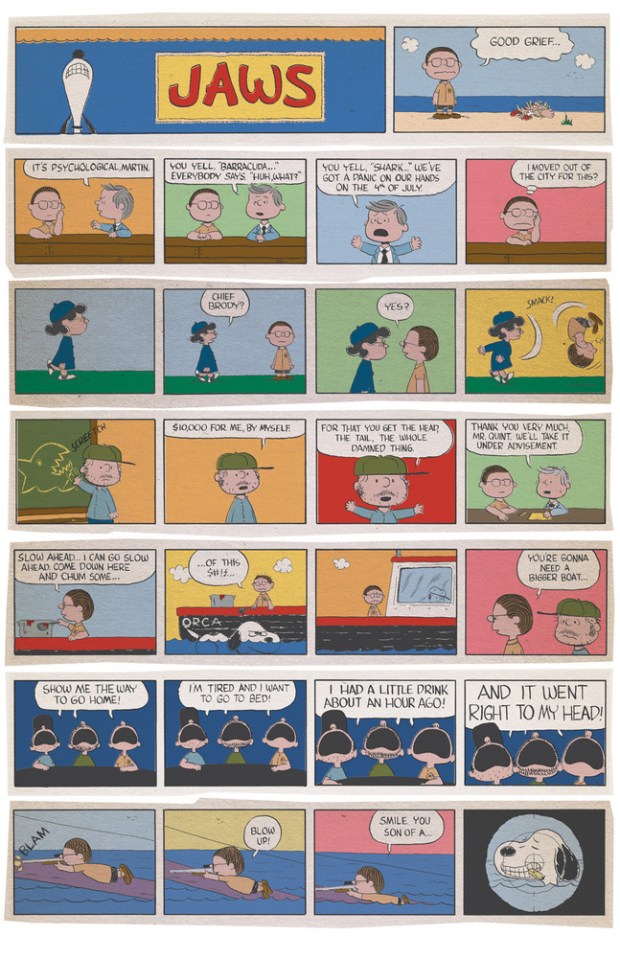
This is so brilliant–two beloved giants of American pop culture colliding at last!

Thanks to Sharks Need Love for these classy vehicles!
Decayed. Abandoned. Immortal
A literary journal of safety and danger
Today's News, Yesterday's History
The daily musings of a writer.
News and images from The Forbidden Kingdom, opening in the US April 18, 2008
4 out of 5 dentists recommend this WordPress.com site
Because we don't have the luxury of being single-issue
Essays on Creative Nonfiction
A Creative Camera Club Inspiring people to take photographs
Writer, Reader, Kind of Spritely Looking
Historic Hollywood and Southern California Architecture, History, People and Travel by Steve Vaught
Forget Hunters' Feeble Rationalizations and Trust Your Gut Feelings: Making Sport of Killing Is Not Healthy Human Behavior
DEENA METZGER'S BLOG
This is where Island Radio 88.7 FM podcasts - and more...
Smart and surprising
Critique Collective is your source for information and interviews about emerging and established contemporary artists.
A daily dose of funny videos
Speaking for those with no voice~
outsider publishing from 2011 to 2015
 Shark Dreams