Day 107 10/10/13: Be a Voice for Whales and Dolphins

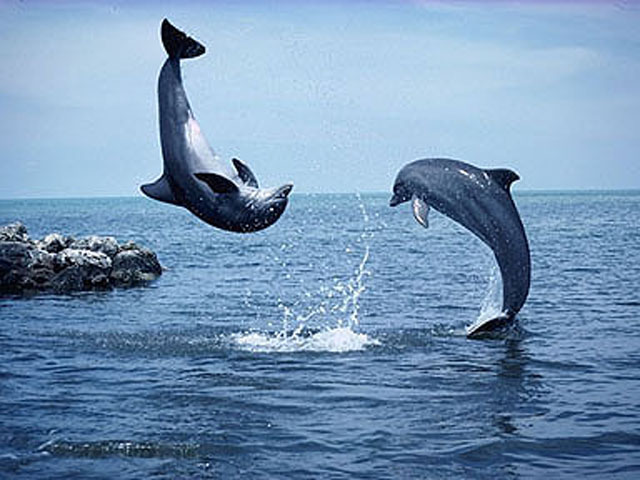
Dolphin funToday’s action: small, but important.

Sign Oceana’s petition to President Obama asking the president to halt proposed underwater seismic tests (part of underwater oil & gas explorations)  that disrupt the communication, feeding and general well-being of whales, dolphins and other marine mammals.

Day 106 10/9/13: Valentine Road

Driving home from a lecture on blogging, (I blog far too much and at all the wrong times), I heard an interview with Marta Cunningham, the director of  “Valentine Road”  a documentary about the 2008 shooting of Lawrence King, an openly gay  junior high school boy in Oxnard, California.

While Cunningham doesn’t demonize Brandon McInerney, the 14-year-old who killed Lawrence during his first period class (the murdered boy had asked McInerney two days before to be his valentine), the director is quite critical of how the school handled things. For example,  in the wake of the shooting, the faculty might have handled the traumatized middle schoolers a bit more delicately, instead of herding them into a spare classroom for a screening of “Jaws.”

I tried to inhabit the bodies of those kids who’d just seen their classmate executed in front of them. The  queasy unreality I felt after being car-jacked during the L.A. riots was the closest I could get.

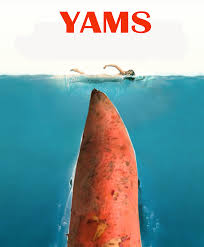
I hardly ever think of “Jaws” as a violent movie, but If I’d just witnessed the murder,  how might I process a story that begins with a naked woman wrenched beneath the surface of a dark ocean by something unseen?  Would I cheer for Chief Brody perched on the sinking mast of the Orca, firing his rifle at the relentless beast and uttering his triumphant “Smile, you son of a bitch,” before he blows the shark to bits?

It’s beyond horrible that school shootings, workplace shootings, movie theater shootings, and mall shootings have become routine events in this country.

John Lennon would have been 73 years old today if he’d not been shot and killed in 1980.

A few months after his death, I stood at a podium. I was 14 years old, burning with passion and grief at my hero’s murder. I debated another eighth-grader on the need for gun control. I don’t remember the particulars of the debate, which is now just a flash of feeling, more dream than memory. I only know that I won.

Day 105: 10/8/13: Dissection Poetics

As I showed my class this documentary about the dissection of a white shark that suffocated in the safety net around a South African beach, I started to write this little poem:

The stout researcher measures herself against the immense liver.

She holds the grape-like lens of the shark’s dark eye in her palm.

Freeing the grinning triangle head,

her fingers ski down the pale y-shaped brain

hind, mid and forebrain

over the white scent bulbs

“The gills,” she says, “are like the leaves of a book.”

Meat pages, salt pages, a story in which

blood and water rush

endlessly against each other

(to be continued…..)

Day 104 10/7/13: Ask Singapore Airlines to Stop Transporting Shark Fins

English: Fresh shark fins drying on sidewalk a...

English: Fresh shark fins drying on sidewalk at Hong Kong (Photo credit: Wikipedia)

(With apologies for the awful and unintentional rhyme:

Do a sharks a kindness, sign this:

https://www.causes.com/campaigns/35520-encourage-singapore-airlines-to-stop-shipping-shark-fins

Day 103 10/6/13: Certified and Certifiable

David Foster Wallace gave a reading for Booksm...

David Foster Wallace  (Photo credit: Wikipedia)

“That’s great! That’s just great! You’re certifiable! Do you know that, Quint?” Brody (Roy Scheider) hollers after Quint (Robert Shaw) smashes the boat’s radio (no more calling in for a bigger one) with a baseball bat.

I replayed that “Jaws” scene endlessly in my head on the way back from Catalina as my dive teacher filled out my diver certification card. I am by no means “good” at diving, but I am no longer afraid of bleeding ears or the large sharks attracted by the ribbons of blood pulsing from my exploding lungs.

The ocean is beautiful—heart-rendingly so. But I don’t want to disturb its inhabitants. I don’t want to shine flashlights in crevices to see lobster, or play with sea cucumbers. Even as I thrilled at the glimpse of a retiring purple octopus curled up in a rock hole, I felt a rush of feeling for the little guy. I know that octopus LIKE to be left alone. And lobsters seem to value their privacy as well.

I felt glad that I would be  teaching David Foster Wallace’s “Consider the Lobster” in the morning.

The essential question is this:

How do I commune with animals, while not interfering with their nature, their ways of being? 

It’s not that animal rights guilt precludes my enjoyment of the natural world, but thoughts about animal consciousness increasingly shape my experiences.

I grew up riding horses and still love doing it (as a way of seeing the countryside), but even that activity is fraught with complications: bits, and crops and heels into ribs. I recently discovered this observation (given in sign language) from the always candid Koko the Gorilla:

Koko looks at a picture of a horse with a bit in his mouth:

K: horse sad.

CD: Why?

K: TEETH.

(Check out more of Koko’s insights in this fascinating argument for the personhood of gorillas).

More on this idea of displacement & communion soon. The sea hath ignited in my mind the power and glory of language while it seemed to have sapped the very marrow from my bones.

Day 102 10/5/13: The Shark Ate My Homework

Reviewing the student responses to Ralph Collier’s lecture, I’m pleased that the majority wanted to hear more about shark conservation and that Ralph’s amazing stories about great white behavior made many of them realize that “fish can be smart.”

Ah students! They invent such striking turns of phrase. Ralph showed a video of a shark releasing a cloud of waste over a diving cage, and someone referred to this phenomenon as the “shark farting.” This was no fart. The shark rained shit and piss, but I have never read the words “shark” and “fart” in close succession and I must say there’s a playful musicality to the term.

I figured I get a lot of “pray” instead of “prey” (or even “preys”),  for this assignment, but this sentence exceeds my expectations: “Mr. Callier explained how sharks can be very specific with where they hunt their praise.”

When a white shark sinks his teeth into the edge of a kayak, is he simply saying, “Look at me, for Chrissakes. Love me as I am–with my lurid gums and sandpaper skin and efficient torpedo design? How many more femoral arteries do I have to sever to get a little attention?”

Sigh. Sharks Have Needs

Day 101 10/4/13: Five Things I Learned at the Marine Mammal Center

Image

1. The pinnipeds arriving at the San Pedro rarely suffer from shark bites. The Center’s marine biologist, Chris Nagel has seen about three shark bites in five years. Most of these bites involve a stripping off of the skin. As I mentioned about a million blog posts ago, the Center treats shark bites (quite successfully) with special bacteria-free honey from South America and…duct tape.

2. The seals and sea-lion patients do suffer from marine mites, a variety of bacterial infections, and injuries inflicted by people. These include gunshots to the face, being tossed mackerel stuffed with dynamite and having their flippers hacked off by angry fishermen. Dead seals have also been found with algae-covered plastic water bottles in their guts. The most common ailment the animals suffer from–dehydration–is also indirectly, human-caused. Pinnipeds get their water from fish. Rising surface temperatures drive fish to the cooler depths. As the immature seals don’t know how to dive very deeply, they either can’t find fish, or depend on their mothers who must then go on deeper, and often longer hunts and don’t always return with food or return at all.

3. Anti-evolutionists often protest at the MMC. Even though they don’t believe in evolution, these activists express outrage that the Center “wastes” money to nurse sick and wounded animals back to health rather than “relying on natural selection.” I know, I know.

4. Some of the marine mammals that aren’t able to return to the wild, ” join” the Navy. The seals work for the military as search and rescue animals. They carry tools and identify foreign divers. Smart and cooperative, the slippery charmers are also highly social animals and rarely go AWOL. Porpoises however, are higher maintenance, and so often dubbed “The Lindsay Lohans” of the sea. The idea of drafting animals into military service makes me feel very weird.

5. Harbor seals, those spotted little darlings whose plush effigies populate aquarium gift shops everywhere, are actually really, really mean. Fur seals are also pretty cantankerous and are never returned to the ocean in popular swimming or surf spots, where they would likely bite people, but instead are transported about 40 miles out on the ocean before they’re set free.

Day 100 10/3/13: Seal Lullaby

I post this Rudyard Kipling poem in honor of my trip to the Marine Mammal Center tomorrow where I will meet some pinnipeds on the mend:

Seal Lullaby

Oh! Hush thee, my baby, the night is behind us,

And black are the waters that sparkled so green.

The moon, o’er the combers, looks downward to find us

At rest in the hollows that rustle between.

Where billow meets billow, there soft be thy pillow;

Ah, weary wee flipperling, curl at thy ease!

The storm shall not wake thee, nor shark overtake thee,

Asleep in the arms of the slow-swinging seas.

Pacific harbor seal in recuperation pool at th...

Pacific harbor seal in recuperation pool at the Marine Mammal Center. Photo Credit: The Marine Mammal Center (Photo credit: Wikipedia)