
Like something from the busy nightmares of Bosch–or the radiated coast of California. (Thanks for the pic Brandy R.)

Like something from the busy nightmares of Bosch–or the radiated coast of California. (Thanks for the pic Brandy R.)
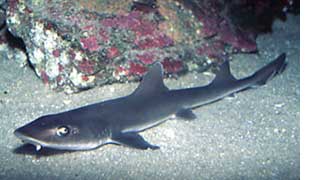 Maryland is proposing exceptions to the “landed with fins intact” law, weakening existing shark fin bans by allowing fishermen to remove the fins of smoothhound sharks at sea. The smoothhound exception could spell the beginning of the end of shark protection in the state.
Maryland’s Department of Natural Resources is taking comments TODAY only.
Please take action here. It will require less than five minutes. And please share!
Thanks to Southern Fried Science and shark hero Sarah Mucha for the alert.
 I just discovered a great short story by Richard Wright (the last one he ever wrote) called “Big Black Good Man.” The main character is a white man named Olaf, a night porter in Copenhagen hotel. Olaf considers himself a broad-minded & fair sort of fellow until a sailor named Jim, “the biggest, strangest and blackest man” Olaf has ever seen, asks to rent a room.
I love literature that explores psychic states and attempts to imitate the impossible rhythms and trajectories of thought, but I’ve never read a story that plunges straight into the fearful and obsessive nightmare of racism. Wright’s story has very little external action, but takes the reader on a twisted ride through Olaf’s paranoid imagination. After an extremely tense and bizarre encounter with Jim, Olaf curses and says, “I hope the ship he’s on sinks…I hope he drowns and the sharks eat ‘im.” That night Olaf lies awake in bed imagining that the freighter Jim is due to sail out on springs a leak:
“Ah, yes, the foamy surging waters would surprise that sleeping black bastard of a giant and he would drown, gasping and choking like a trapped rat, his tiny eyes bulging until they glittered red, the bitter water of the sea pounding his lungs until they ached and finally burst…The ship would sink slowly to the bottom of the cold, black, silent depths of these and a shark, a white one, would glide aimlessly about the shut portholes until it found an open one and it would filter inside and nose about until it found that swollen, rotten, stinking carcass of the black beast and it would then begin to nibble at the decomposing mass of tarlike flesh, eating the bones clean…Olaf always pictured the giant’s bones as being jet black and shining.
Once or twice, during these fantasies of cannibalistic revenge, Olaf felt a little guilty about all the many innocent people, women and children, all white and blonde who would have to go down into watery graves in order that that white shark could devour the evil giant’s black flesh…But, despite feelings of remorse, the fantasy lived persistently on, and when Olaf found himself alone, it would crowd and cloud his mind to the exclusion of all else, affording him the only revenge he knew.”
Wright’s italicizing of the word “white” makes the shark into an Aryan messenger of the deep, meting out the violent racial “justice” that the impotent Olaf cannot, and unfortunately killing a few innocent blondes in the process. I’m sure some scholars find the anthropomorphism too extreme, but I like the shark-as-ethnic-cleanser metaphor. It’s original and eccentric, obvious and preachy at the same time. And do we know that “a white one” is actually a great white shark, or is it some super white albino style that is as white as Jim is black, the only creature capable of vanquishing this “mountain” of a man?
But however wild Olaf’s fantasies become, Wright doesn’t really exaggerate the fear that drives them, and all the wild and furious ways that fear can metastasize. Thinking about racism led to thinking about speciesism and all the hate doled out to sharks in Australia, to the wolves of Idaho, all the creatures made “other” by human beings. Alice Walker’s essay “Am I Blue?” is the first piece of lit I read that links racism and speciesism. Please check it out here.
 I found several interesting orca stories today.
First, let us consider the mysteries of killer whale behavior:
1. Orcas find kayakers fascinating! The audio is a little irritating, but the point of view is kind of cool.
2. Orcas follow Kiwi swimmer to the beach.
Next, more trouble for $eaWorld:
3. Is SeaWorld racist?
And lest we forget:
4. SeaWorld is complicit in Japanese dolphin slaughter.
 1. Your eyes will love this: Beautiful biofluorescent sharks & other fishes.
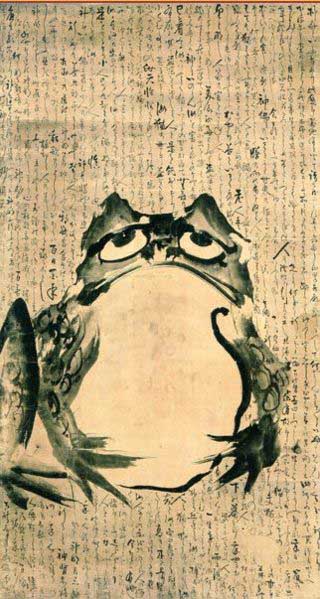
2. Nature has feelings: A fascinating piece on the poetics of Basho.
3. Writer’s block? Pshaw! Check out poet Bernadette Mayer’s writing experiments.
4. New Zealand welcomes Shark Whisperer Ocean Ramsay.
5. Weirdly beautiful time lapse video of living, breathing & fighting coral from the Great Barrier Reef.

I have only yet begun to catalogue the blogs I love. Here’s a few to start:
1. Fuckyeahsharks is really fun! Great shark gifs, shark pix and more.
2. I’m always amazed at the fearlessness & intelligence of The Daily Headache.
3. I LOVE this blog! Biblioklept is a daily surprise and delight if you love art & lit.
4. Walking with Alligators: Helping endangered creatures in the Everglades & beyond.
5. Find out how recent wolf & coyote hunts and other wildlife massacres screw up the ecosystem at Exposing the Big Game.
6. Sofastory: Every abandoned couch has a lurid & lovely tale to tell on this Tumblr blog.
 I’m sorry that some of these are a day or two old, which I know is kind of a sin in this hyper immediate world in which we live, blah. blah. Anyway, here are some interesting stories you might enjoy:
1. An interesting perspective: Shark attack victims react to Australia’s shark cull.
2. File Under: A story I wish I had not read: Leo DiCaprio describes how his great white cage diving experience went rather, um…wrong.
3. Wanna learn about weird, ancient spoon-billed sharks? Sure you do!
4. New Zealand to ban shark finning!
 Above my desk hangs a picture from the front page of the Los Angeles Times featuring a male mountain lion standing on a dusty ridge while behind him the lights of Hollywood spread out in an undulating grid of white and gold. The combination of the seemingly infinite cityscape and this single rugged, wild creature is powerful and sad. The lion is traversing a rapidly disappearing edge of land separating city and nature. As new human settlements zigzag up the sides of the dry hills, more animals are pushed out.
I started the day reading a story about how three cubs born recently in the Santa Monica mountains were inbred, a bad sign for this tiny vulnerable population of wild cats with whom, as the signs in Griffith Park and Hollywood Reservoir remind me, I share the semi-wilds of Los Angeles. Sadly, the marginalized lions of West Africa face the same problem of vanishing territory and inbreeding.
Since the 1990s when the Getty Center was built, wildlife advocates have called for a corridor to be built to help the big cats and other animals displaced by this art complex with its trams, parking garages, gardens and imported marble, make their way across the 405 freeway. Last year, an adult male lion “searching for a home” successfully navigated eight lanes of traffic only to be killed when he couldn’t leap over a retaining wall topped with chain link fencing.
In my neighborhood, I see songbirds nesting in the hollow insides of street signs. I marvel at their resilience. It’s a wonder! I think, how lucky I am to witness such a charming phenomenon. But then I realize that beyond the street sign nests’ poetic value or scientifically miraculous coolness, it’s a symptom of displacement, a forced adaptation to an urban (human) world.
On Facebook, I sign anti-hunting petitions and share infuriating pictures of men (horrible) women (even worse, somehow) beaming and proud or solemn and tough, as they crouch in the snow over dead wolves or embrace enormous freshly-killed lions. If not for the prominently displayed hunting rifles, the lions might be asleep–majestic storybook kings with great, silent paws, their eyes slits of kindness.
A few clicks of the mouse later I find other pictures. At a controversial zoo in South America, tourists smile into the camera as they nuzzle living lions and tigers who appear drowsy, or completely passed out. Zookeepers offer the dubious claim that these big cats are not drugged, but so well-fed, so expertly raised by trainers, who socialize them with dogs, that their natural “wild” instincts are subdued enough to allow for picture taking and cuddling.
I met a mountain lion and her cub in Idaho in 1991. I don’t remember why I traveled to Sun Valley with my boyfriend Michael, but at the time, we were very much interested in mountain lion conservation. We held a music benefit in L.A. to raise money and awareness. Maybe our trip was related somehow to that project.
The mountain lion I met that sunny winter day was not wild, not like the animals I’ve heard about who have stalked mountain bikers in California, or dragged deer up into the wintry treetops in New Hampshire. This puma had been used in commercials, (she might have been in one of the old Lincoln-Mercury ad campaigns), although she radiated such untouchable self-possession that I could only imagine that even the most chaotic television studio was simply a landscape she had passed through on her purposeful march back toward the wilderness that had given birth to her. The lion’s handler was an older man who seemed to take good care of her. Let’s call him Charlie. Charlie walked the lion on long lead attached to a very heavy collar, although she seemed not to follow, but rather advance. The beautiful cat, whose name I’ve long forgotten, had an adorable cub who played in the snow nearby. We posed for a group Polaroid, Michael holding the delightful youngster who emitted sweet, odd birdlike sounds and baby growls. Charlie told me I could pet her. I lowered a hand, stiff and tentative onto her back. Her fur felt thick and coarse, but the sensation I remember most is an energy that seemed to originate in her ribs or belly, both vibration and feeling, electric and terrifying. As she watched her baby leap and tumble in the snow, the lion mother made low, guttural sounds.
“You can pose with her by yourself,” Charlie said, once when we’d taken the group shot. Noticing my frozen smile, he added “She’s just is a little distracted right now cause her cub is here, but she’s okay.”
“I’m fine,” I said. In that moment, I understood my human place, strange lost creature that I was, standing there on the freezing edge between wildness and the world.
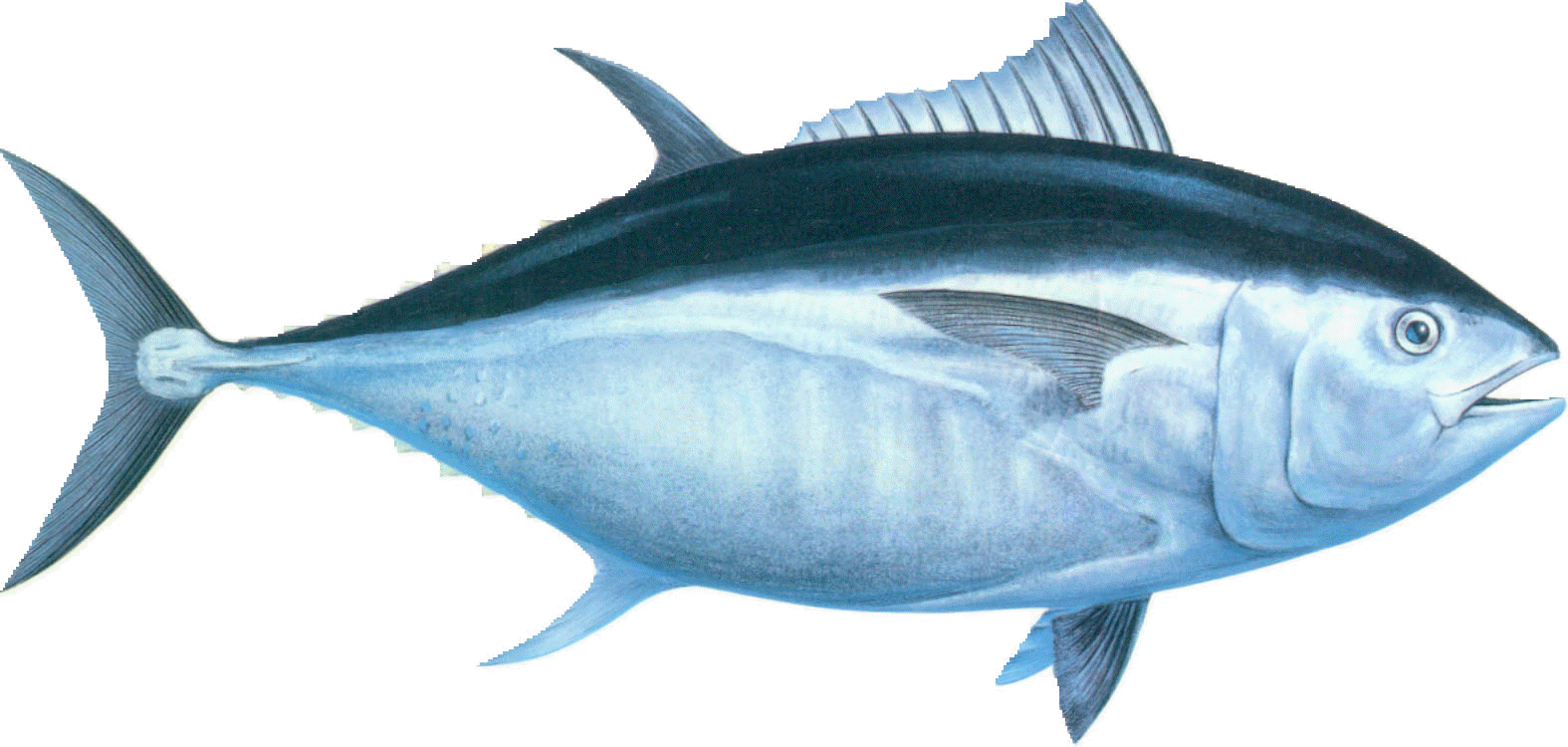 Bycatch (the fish and countless sea mammals, birds, etc. that are incidentally caught, killed and disposed of by commercial operations–see Day 175 of this blog for an extensive catalogue of the species that are routinely killed and discarded as bycatch ) is a HUGE problem. But you can help!
Send your comment to National Marine Fisheries Service about Amendment 7, which would help curb some of the excessive waste incurred in fishing for bluefin tuna. This will take you about half a minute at most. Click here to take action!
Here’s a hodgepodge of the odd, sad and inspiring:
19 arrested (including a12-year-old girl) protesting Seaworld float in Rosebowl Parade.
Terrified swimmer chased by fake fin!
Shark Terror Down Under Leads to Indiscriminate Slaughter.
Over 300 Sharks Now on Twitter!
Decayed. Abandoned. Immortal
A literary journal of safety and danger
Today's News, Yesterday's History
The daily musings of a writer.
News and images from The Forbidden Kingdom, opening in the US April 18, 2008
4 out of 5 dentists recommend this WordPress.com site
Because we don't have the luxury of being single-issue
Essays on Creative Nonfiction
A Creative Camera Club Inspiring people to take photographs
Writer, Reader, Kind of Spritely Looking
Historic Hollywood and Southern California Architecture, History, People and Travel by Steve Vaught
Forget Hunters' Feeble Rationalizations and Trust Your Gut Feelings: Making Sport of Killing Is Not Healthy Human Behavior
DEENA METZGER'S BLOG
This is where Island Radio 88.7 FM podcasts - and more...
Smart and surprising
Critique Collective is your source for information and interviews about emerging and established contemporary artists.
A daily dose of funny videos
Speaking for those with no voice~
outsider publishing from 2011 to 2015
 Shark Dreams