Day 224 2/4/14: 25% of Sharks & Rays Near Extinction

Day 224 2/4/14: 25% of Sharks & Rays Near Extinction

Overfishing. Finning. Sport fishing. Shark culls.

Please take action any way you can. Write letters. Host a viewing party for the documentary “Sharkwater,” organize a fundraiser. Give a lecture. Use the talents & gifts unique to you to make a difference for the oceans and the animals. Their fate is our fate.

Day 216 1/26/14: Urgent Action: Keep Shark Fin Bans Strong!

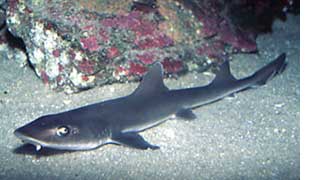
smoothhoundMaryland is proposing exceptions to the “landed with fins intact” law, weakening existing shark fin bans by allowing fishermen to remove the fins of smoothhound sharks at sea. The smoothhound exception could spell the beginning of the end of shark protection in the state.

Maryland’s Department of Natural Resources is taking comments TODAY only.

Please take action here. It will require less than five minutes. And please share!

Thanks to Southern Fried Science and shark hero Sarah Mucha for the alert.

Day 206 1/17/14: Friday Poetry/Science Mishmash

basho81. Your eyes will love this: Beautiful biofluorescent sharks & other fishes.

2. Nature has feelings: A fascinating piece on the poetics of Basho.

3. Writer’s block? Pshaw! Check out poet Bernadette Mayer’s writing experiments.

4. New Zealand welcomes Shark Whisperer Ocean Ramsay.

5. Weirdly beautiful time lapse video of living, breathing & fighting coral from the Great Barrier Reef.

Day 202 1/13/14: Some Blogs I Dig: Part 1

dog-blog1

I have only yet begun to catalogue the blogs I love. Here’s a few to start:

1. Fuckyeahsharks is really fun! Great shark gifs, shark pix and more.

2. I’m always amazed at the fearlessness & intelligence of The Daily Headache.

3. I LOVE this blog! Biblioklept is a daily surprise and delight if you love art & lit.

4. Walking with Alligators: Helping endangered creatures in the Everglades & beyond.

5. Find out how recent wolf & coyote hunts and other wildlife massacres screw up the ecosystem at  Exposing the Big Game.

6. Sofastory: Every abandoned couch has a lurid & lovely tale to tell on this Tumblr blog.

Day 200 1/11/14: Spellbinding Shark Stories for a Saturday!

great-white-shark-1-1I’m sorry that some of these are a day or two old, which I know is kind of a sin in this hyper immediate world in which we live, blah. blah. Anyway, here are some interesting stories you might enjoy:

1. An interesting perspective: Shark attack victims react to Australia’s shark cull.

2. File Under: A story I wish I had not read: Leo DiCaprio describes how his great white cage diving experience went rather, um…wrong.

3. Wanna learn about weird, ancient spoon-billed sharks? Sure you do!

4. New Zealand to ban shark finning!

Day 188 12/30/13: The Shag-Eyed Shark

shark-fish-talesIn the poem “The Shag-Eyed Shark,”  a crew of crusty fishermen vent their rage on a shark, cutting out its liver, only to have the shark help them catch a school of prized mackerel. While the old salts in this didactic tale learn not to judge by appearances (they even open the shark again and replace its liver), men & shark in the real world haven’t quite achieved that level of friendship. But if you would like to extend some kindness to sharks, (or other imperiled sea friends), your donation to Oceana will be doubled if you donate before December 31!

Day 176 12/18/13: A Hodgepodge of Cool Shark Stories

(Very Cool) Read this to learn how prehistoric sharks escaped extinction.

I love these guys! Australian Activists Fight the Shark Cull.

Wanna sign a petition banning the import of shark fins to Canada? OF COURSE you do!

A touching story of maternal instinct: Lemon Shark Moms in the Nursery! 9

Day 175 12/17/13: The Truth About Eating Fish

Jonathan Safran Foer’s “Eating Animals” is one of the most compelling, accessible books on factory farming, industrial fishing, “humane” farming and the psychology of eating animals. Foer’s description of “bycatch” belongs in the “great list” hall of fame along with the opening chapter of “The Things They Carried,” and the poetic catalogues of Walt Whitman:

Shrimp by-catch (Location: East Coast of Florida)

Shrimp by-catch (Location: East Coast of Florida) (Photo credit: Wikipedia)

“Perhaps the quintessential example of bullshit, bycatch refers to sea creatures caught by accident—-except not really “by accident,” since bycatch has been consciously built into contemporary fishing methods. Modern fishing tends to involve much technology and few fishers. This combination leads to massive catches with massive amounts of bycatch.

Take shrimp, for example. The average shrimp trawling operation throws 80 to 90 percent of the sea animals it captures overboard, dead or dying, as bycatch. (Endangered species amount to much of this bycatch.) We tend not to think about this because we tend not to know about it.

What if there were labeling on our food letting us know how many animals were killed to bring our desired animal to our plate?

So, with trawled shrimp from Indonesia, for example, the label might read: 26 POUNDS OF OTHER SEA ANIMALS WERE KILLED AND TOSSED BACK IN THE OCEAN FOR EVERY 1 POUND OF THIS SHRIMP.

Or take tuna. Among the other 145 species regularly killed—gratuitously—while killing tuna are: manta ray, devil ray, spotted skate, bignose shark, copper shark, Galapagos shark, sandbar shark, night shark, sand tiger shark, great white shark, hammerhead shark, spurdog fish, Cuban dogfish, bigeye thresher, mako, blue shark, wahoo, sailfish, bonito, king mackerel, Spanish mackerel, longbill spearfish, white marlin, swordfish, lancet fish, grey triggerfish, needlefish, pomfret, blue runner, black ruff, dolphin fish, bigeye cigarfish, porcupine fish, rainbow runner, anchovy, grouper, flying fish, cod, common sea horse, Bermuda chub, opah, escolar, leerfish, tripletail, goosefish, monkfish, sunfish, Murray eel, pilotfish, black gemfish, stone bass, bluefish, cassava fish, red drum, greater amberjack, yellowtail, common sea bream, barracuda, puffer fish, loggerhead turtle, leatherback turtle, hawksbill turtle, Kemp’s ridley turtle, Atlantic yellow-nosed albatross, Audoin’s gull, balearic shearwater, black-browed albatross, great black-backed gull, great shearwater, great-winged petrel, grey petrel, herring gull, laughing gull, northern royal albatross, shy albatross, sooty shearwater, southern fulmar, Yelkouan shearwater, yellow-legged gull, minke whale, sei whale, fin whale, common dolphin, northern right whale, pilot whale, humpback whale, beaked whale, killer whale, harbor porpoise, sperm whale, stripe dolphin, Atlantic spotted dolphin, spinner dolphin, bottlenose dolphin, and goose-beaked whale.

Imagine being served a plate of sushi.

But this plate also holds all of the animals that were killed for your serving of sushi. The plate might have to be five feet across.

Day 174 12/16/13: Sharks, Bad Grammar & The Mystery of Life

Dark Shadows

Dark Shadows (Photo credit: Wikipedia)

I endlessly complain about student writing. I am forever scrawling “AWK” or “Huh?” or even “Whaaaat?” along margins and above cryptic sentences that jerk and twitch between lazy slang and stiff, fake formality. I hate weird syntax, wordiness, foggy thinking, limp verbs and the epidemic misuse of words like “portray,”  “careless” and “depict.” I dread the insertion of the falsely fancy “Webster’s Dictionary defines,” invariably used to decode the most obvious words.

But once in a while, a slightly awkward sentence lumbers across the page bearing an odd gift in its clumsy paws. Like primitive special effects in monster movies, or wobbly tombstones and melting makeup on old “Dark Shadows” episodes, dopey sentences can cut through the confines of logic and expectation and help us see “beyond.”

While I criticized my class for the anthropomorphic tendencies of their first essay on Mary Oliver’s “The Shark,” strains persist in subsequent drafts:

“Due to its naivete, the shark was caught and killed,” or “Sharks and humans are similar in the sense that…neither of them can understand many aspects of life.”

As absurd and maddeningly vague as the second sentence is (“aspects” is a hallmark of the half-baked thesis), there is a promising glimmer of intrigue:

What are the mysteries of life that vex both human and shark?

I wonder about the limits of our sophisticated intellect, and their keen senses. I consider the loneliness of our respective otherness.

What does that black eye see when the white shark pops his head above the surface and “studies” the men in the boat?

Maybe it’s impossible to bridge the mystery between humans and animals without projecting, exchanging, blurring rational boundaries between man and fish.  But maybe selective, purposeful anthropomorphizing, like the accidental power of a sloppy, silly sentence, could open up some understanding between us.

I recently bought a watercolor of a shark wearing a crown and holding a scepter. I wanted the little painting because it was ridiculous and fun, but now I realize that in that picture’s absurdity there’s a certain feeling of justice restored, a reminder of the truth, of the way things should be: sharks are the natural rulers of the sea.

And I declare myself a most loyal subject to the rightful king.